
GHK-Cu: The Copper Peptide at the Heart of Skin Renewal Research
A tiny peptide the body already makes, a copper ion, and decades of research into collagen and skin renewal.
PeptiLab editorial team · Research desk · 21 October 2026
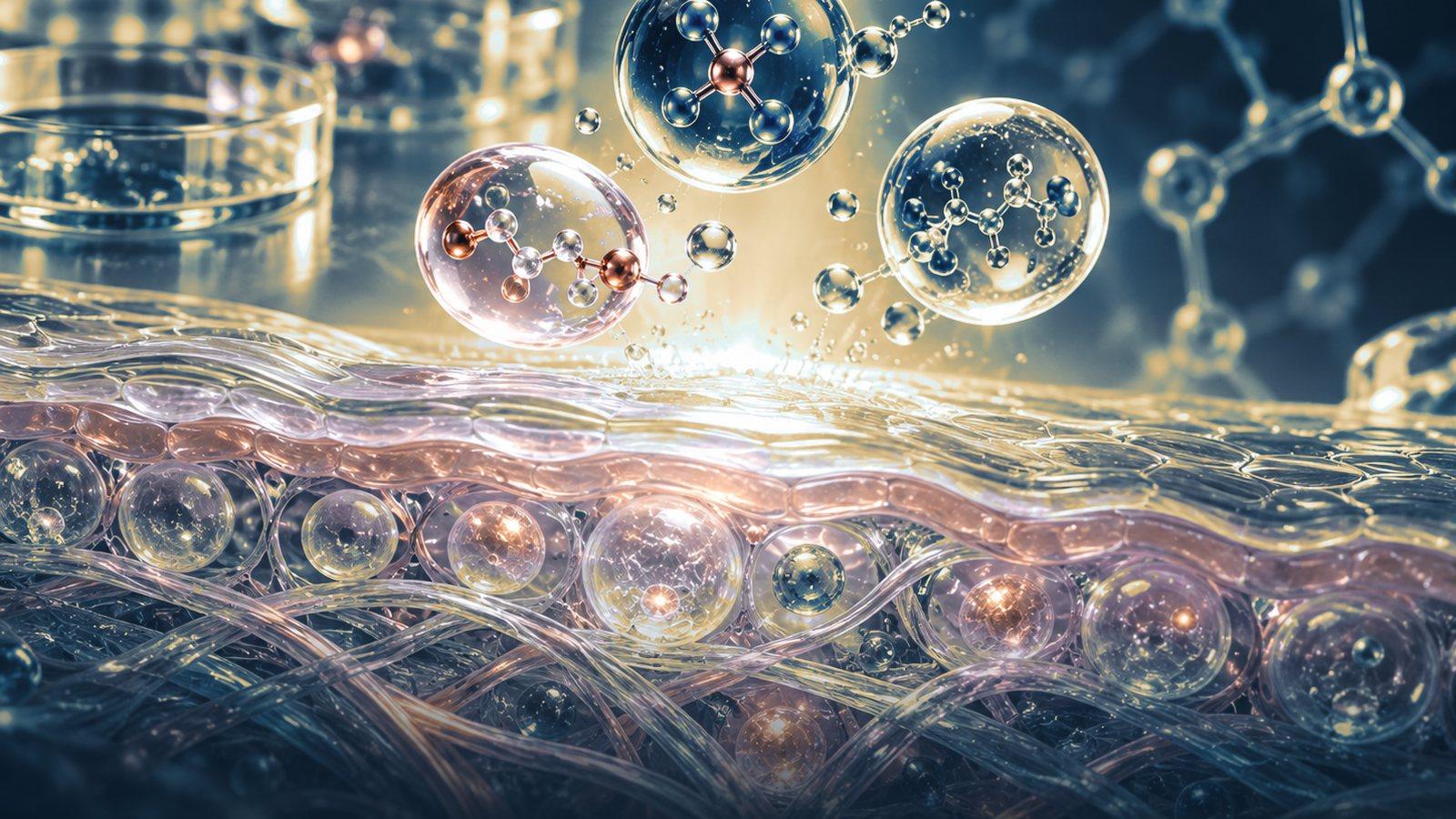
Some of the most interesting compounds in skin research are not invented from scratch. They are molecules the body already makes and slowly loses. GHK-Cu is the best example: a tiny peptide that circulates in human blood, binds copper, and has been studied for more than four decades for its role in tissue renewal.
What GHK-Cu is
GHK stands for glycyl-histidyl-lysine, a chain of just three amino acids. It was first isolated from human plasma, and it is also found in saliva and urine. Its defining feature is a strong affinity for copper ions. Bound to copper it forms GHK-Cu, the form studied in most repair and skin research.
Copper matters here because several enzymes that build and cross-link collagen and elastin depend on it. GHK is studied as a way of delivering copper exactly where tissue is being rebuilt.
Why age makes it interesting
GHK levels in the body decline with age, from about 200 ng/mL in plasma at age 20 to around 80 ng/mL by age 60. That single observation is what turned a plasma peptide into one of the most researched molecules in skin science: if a natural repair signal fades over time, what happens when it is restored?
Collagen at very low concentrations
Collagen is the protein that gives skin its firmness and structure. In a classic study on fibroblasts, the cells that produce collagen, GHK-Cu stimulated collagen synthesis starting at concentrations as low as 10^-12 to 10^-11 molar and reached its peak effect around 10^-9 molar. Importantly, the increase was not just the result of more cells: each cell was producing more collagen.
Activity at such tiny concentrations is the sign of a molecule that works as a signal, which is exactly how GHK is understood today. Later work by the same group in animal wound models reported increased collagen deposition in healing tissue.
A signal for many genes
Newer research has looked at GHK through gene expression data. A 2018 review pulled these findings together and described GHK as influencing a broad network of genes linked to tissue remodelling, antioxidant defence and the control of inflammation. That wide reach helps explain why the same peptide shows up in research on skin, hair, wound repair and tissue protection.
Where it fits
GHK-Cu is the go-to peptide for skin-focused research: collagen, firmness, and the repair processes that slow down with age. It is available on its own and as a core component of our GLOW blend, which combines it with repair peptides for a broader skin and recovery focus.
Research use only
This article summarises published research. The compounds are supplied for research purposes and nothing here is medical advice or a dosing recommendation.
Sources
- Maquart FX et al. Stimulation of collagen synthesis in fibroblast cultures by the tripeptide-copper complex glycyl-L-histidyl-L-lysine-Cu2+. FEBS Lett. 1988;238(2):343-346 · PMID 3169264
- Pickart L, Margolina A. Regenerative and Protective Actions of the GHK-Cu Peptide in the Light of the New Gene Data. Int J Mol Sci. 2018;19(7):1987 · PMID 29986520
More in research
KPV: The Three-Amino-Acid Peptide Studied for Calming Inflammation
The anti-inflammatory core of alpha-MSH, cut down to three amino acids, and why gut and skin researchers keep coming back to it.
Melanotan II and PT-141: One Receptor Family, Two Very Different Goals
The same family of receptors, two different targets: skin pigment and desire. How a tanning peptide led to an FDA-approved one.
Semax and Selank: Focus and Calm from the Same Moscow Lab
One sharpens, one steadies. Two nasal peptides from the same lab, and the research behind focus and calm.
For research use only. Not for human consumption, medical treatment, or veterinary use. Full disclaimer